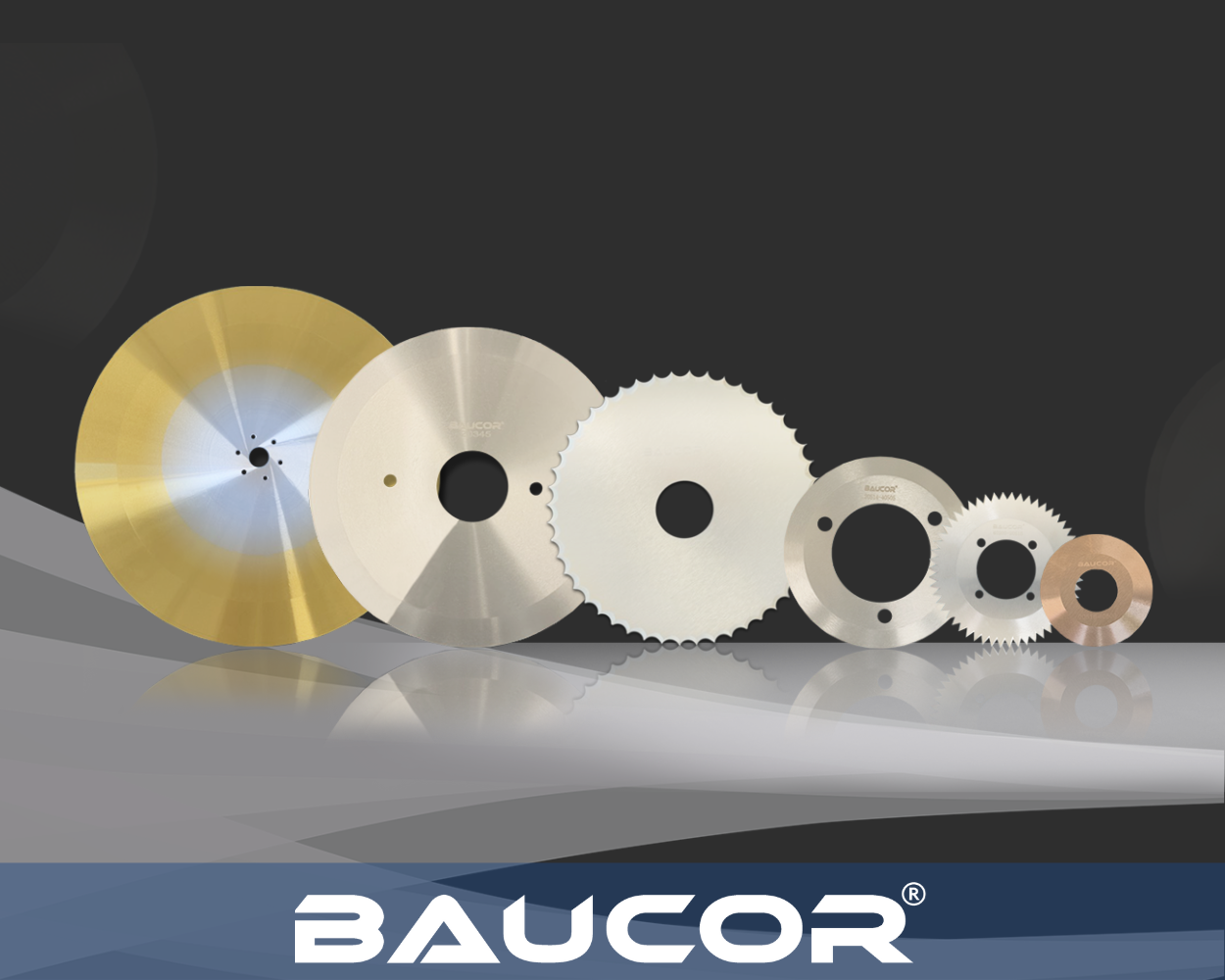
Industrial blade manufacturer highlights custom blade design, material selection and precision manufacturing through a real-world customer application.
IRVINE, CA, UNITED STATES, October 27, 2026 /EINPresswire.com/ — Baucor, a German-American manufacturer of precision industrial cutting tools, is highlighting an engineering-led approach that helps manufacturers evaluate replacement blades as opportunities to improve cutting performance, address recurring wear problems and reduce potential production disruptions.
Rather than treating replacement blades as standard consumable components, Baucor combines blade design, application-specific material selection, precision manufacturing and surface treatments to address the operating conditions behind cutting challenges.
The approach is particularly relevant for manufacturers working with rubber, packaging materials, paper, textiles and other industrial products where blade geometry, material properties and cutting-edge quality influence production performance.
A custom blade project with Beltservice Corporation demonstrates how this engineering-focused approach can address an application-specific cutting problem.
Customer Success Story: Solving a Rubber Cutting Challenge
Beltservice Corporation, a supplier of conveyor belt products and related industrial solutions, approached Baucor with a cutting challenge involving rubber sidewall material.
The application required a blade solution capable of producing the intended cut while addressing material tearing and meeting the customer’s equipment requirements.
Instead of supplying a generic replacement blade, Baucor developed a customized solution based on the application’s cutting conditions, dimensional requirements and material characteristics.
The project involved a custom-coated stainless steel blade designed to meet the customer’s specified geometry and fit requirements.
“Out of the box, everything fit and aligned perfectly,” said a representative of Beltservice Corporation.
The feedback highlights the importance of accurate manufacturing and application-specific engineering when producing replacement cutting tools.
For manufacturers evaluating Rubber Cutting Blades, the project illustrates why selecting a blade based solely on dimensions or an existing part number may not fully address the underlying cutting challenge.
Blade geometry, edge preparation, material compatibility and mounting accuracy can all influence how a cutting tool performs in its intended application.
The Beltservice project also reflects Baucor’s broader approach: evaluating the cutting application before determining the most suitable replacement blade configuration.
Engineering Replacement Blades for Application-Specific Performance
Industrial blades operate under different mechanical loads, cutting speeds, material conditions and production environments.
A blade that performs effectively in one application may not provide the same results when used with a different material, machine configuration or operating cycle.
Baucor addresses these variables through an engineering process that considers the blade and its intended application together.
As one of the Custom Blade Manufacturers serving industrial cutting applications, Baucor supports customers requiring replacement blades, modified cutting geometries and entirely new blade configurations.
Its engineering evaluations may include:
Blade geometry: Cutting-edge profiles, blade thickness, angles and application-specific dimensions.
Material selection: Steel grades, carbide and other cutting-tool materials selected according to operating requirements.
Edge preparation: Cutting-edge sharpness, surface quality and geometry suited to the intended material.
Surface treatments: Coatings and finishing processes evaluated for wear behavior, friction and material compatibility.
Equipment compatibility: Mounting features, dimensional tolerances and mechanical interfaces.
Production conditions: Cutting forces, operating speeds, maintenance requirements and replacement frequency.
The objective is to identify opportunities to improve blade suitability and manufacturing consistency while maintaining compatibility with the customer’s equipment.
Actual performance improvements depend on the application, operating environment and validated blade configuration.
Material Selection, Coatings and Precision Manufacturing
Blade performance depends on more than cutting-edge sharpness.
Material properties, heat treatment, surface condition and dimensional accuracy all contribute to the behavior of an industrial cutting tool.
Baucor manufactures custom industrial blades using materials selected according to application requirements, including tool steels, high-speed steels, stainless steels and carbide-based solutions.
For suitable applications, surface coatings such as TiN and DLC may be evaluated to address friction, surface characteristics or wear-related requirements.
The selection of materials and coatings depends on the workpiece material, operating conditions and expected blade performance.
Precision manufacturing is equally important.
Accurate mounting features, consistent blade geometry and controlled cutting-edge preparation help ensure that replacement blades meet their intended mechanical requirements.
For qualifying applications, Baucor supports selected critical dimensions with manufacturing tolerances as tight as ±0.002 mm, subject to material, geometry, process and inspection requirements.
By combining these capabilities, Baucor helps customers evaluate replacement blades as engineered components rather than interchangeable cutting consumables.
Supporting Slitter Blades, Circular Slitter Blades and Packaging Blades
The engineering principles behind custom replacement blades apply across a wide range of industrial cutting operations.
For manufacturers using Slitter Blades, blade geometry and cutting-edge condition are important considerations in applications involving continuous material processing.
Circular Slitter Blades may require carefully controlled diameters, thicknesses, cutting-edge profiles and mounting interfaces to operate correctly within slitting equipment.
In packaging production, Packaging Blades must be selected according to the material being processed, machine configuration and required cutting action.
Depending on the application, these tools may be used in converting, slitting, trimming or other cutting operations involving paper, cardboard, films and packaging materials.
Rubber processing presents different challenges, including material deformation, cutting resistance and the need to achieve the intended cut without damaging the workpiece.
These differences reinforce the importance of evaluating each blade according to its actual application rather than applying a single blade specification across multiple manufacturing processes.
Baucor supports custom blade requirements across these industrial applications through engineering evaluation, material selection and precision manufacturing.
From Standard Replacement to Engineered Improvement
Replacement blade purchasing often begins with an existing drawing, part number or worn cutting tool.
While these references provide important dimensional information, they do not always explain why a blade experiences premature wear, inconsistent cutting or repeated maintenance problems.
Baucor encourages manufacturers to consider the operating conditions behind these issues when evaluating replacement options.
A replacement project may involve reviewing cutting-edge geometry, material compatibility, surface treatments or dimensional specifications.
In some cases, the most appropriate solution may be to reproduce the original blade accurately. In others, an application-specific modification may offer a more suitable approach.
This distinction is central to Baucor’s engineering-led manufacturing model.
Rather than assuming every replacement blade requires a redesign, the company evaluates whether changes are technically justified by the customer’s application.
The Beltservice Corporation project provides a practical example of this process, demonstrating how custom engineering and accurate manufacturing can support an application-specific blade requirement.
Engineering Perspective: Understanding the Cutting Application
“Replacing a blade should not always mean repeating the same design,” said Ed Braun, Technical Officer at Baucor.
“When a manufacturer experiences recurring cutting challenges, it is important to understand the material being processed, the operating conditions and the blade’s mechanical requirements. That engineering evaluation helps determine whether the existing design remains appropriate or whether an application-specific improvement should be considered.”
Baucor’s approach connects blade design, manufacturing capabilities and practical application requirements.
The company works with customers to evaluate existing blade specifications, develop custom cutting solutions and manufacture components according to defined technical requirements.
Helping Manufacturers Make More Informed Blade Decisions
As manufacturers seek greater production consistency and more effective maintenance planning, industrial cutting tools remain an important area for engineering evaluation.
Blade selection can influence cutting quality, machine compatibility, maintenance requirements and overall production reliability.
By combining application-specific engineering with precision manufacturing, Baucor aims to help manufacturers make better-informed decisions when sourcing replacement blades or developing custom cutting solutions.
The company’s approach applies to both new cutting-tool designs and existing industrial blades requiring replacement, modification or technical evaluation.
Manufacturers seeking assistance with custom industrial blades, replacement cutting tools or application-specific blade design can contact Baucor’s engineering team to discuss their requirements.
Contact Baucor for Custom Blade Inquiries
About Baucor
Baucor is a German-American manufacturer of precision industrial blades, custom cutting tools and CNC tooling solutions, with operations in Irvine, California, and Mannheim, Germany.
The company develops and manufactures industrial cutting solutions for applications involving packaging, paper processing, rubber, textiles, food processing and other industrial materials.
Its capabilities include custom blade design, precision manufacturing, material selection, cutting-edge preparation and application-specific surface treatments.
Baucor supports customers requiring standard replacement blades, custom-engineered cutting tools and specialized industrial blade configurations.
Through engineering collaboration and precision manufacturing, the company helps industrial customers address cutting challenges and evaluate solutions suited to their production requirements.
Rabia KOCA
Norck
Visit us on social media:
LinkedIn
Legal Disclaimer:
EIN Presswire provides this news content “as is” without warranty of any kind. We do not accept any responsibility or liability
for the accuracy, content, images, videos, licenses, completeness, legality, or reliability of the information contained in this
article. If you have any complaints or copyright issues related to this article, kindly contact the author above.

Media gallery