Manchester, UK, June 30, 2026 (GLOBE NEWSWIRE) — Two weeks into the FIFA World Cup 2026, new data from guest WiFi specialist Purple reveals exactly how, when and where football fans are gathering to watch the tournament across the United States – and the picture is full of surprises.
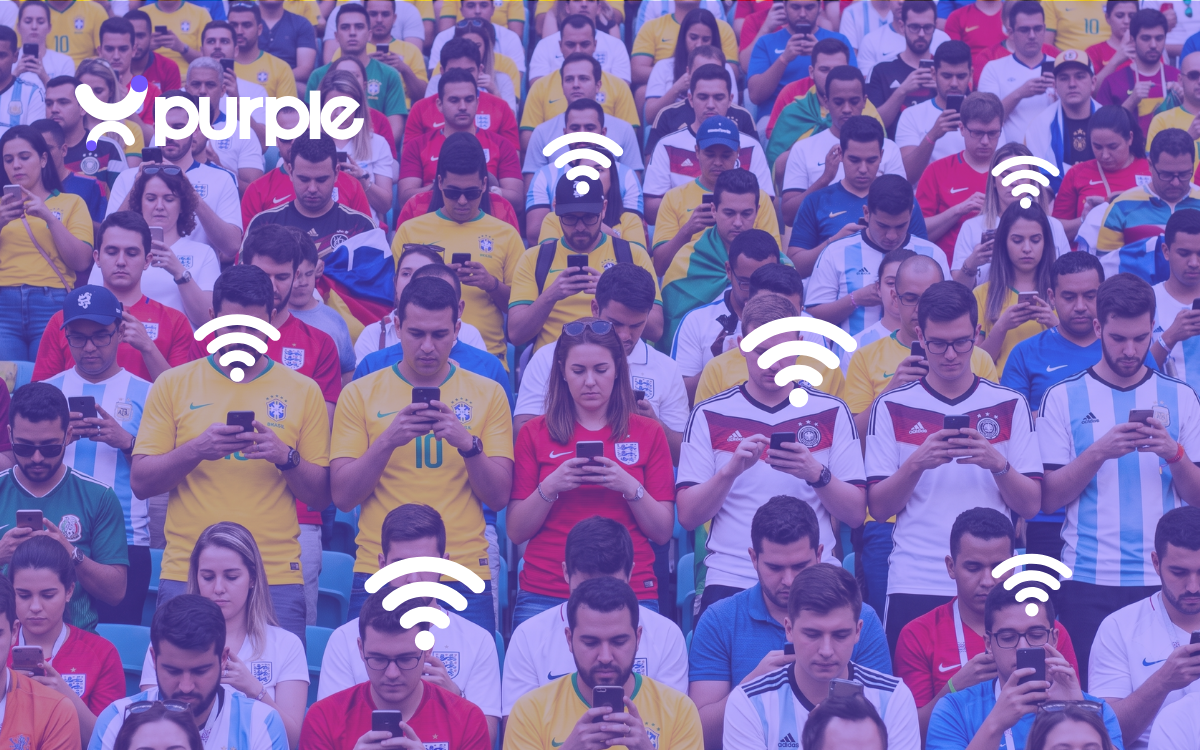
Fans show up for full-time, not kickoff: WiFi data reveals how the World Cup is really being watched across America
Drawing on live session data from 818 venues across the host cities, Purple’s analysis shows that fans aren’t rushing in just in time for kickoff. They’re arriving early, staying late, and reaching for their phones at every break in play.
Fans arrive early and stay for the full-time rush
The data reveals a clear rhythm to a matchday. Logins begin to spike a full two hours before kickoff as fans claim their seats and settle in. They surge again at full-time, with a quarter of all logins (25%) landing two hours after kickoff – as supporters linger to relive the result, share the highlights and order another round.
At one major host-city stadium operating at full capacity, the pattern was even sharper: visible login spikes at hydration breaks, half-time and full-time, as more than 70,000 fans reached for their phones the moment play paused.
“Fans don’t show up for kickoff – they show up for full-time,” said Gavin Wheeldon, CEO at Purple. “The data shows football is now an hours-long social occasion, not a 90-minute event. People arrive early, they stay long after the whistle, and every break in play – half-time, even a hydration break – sends a wave of fans straight to their phones.”
Home games draw the biggest crowds
The tournament’s pull is strongest when the home nation plays. At that same host-city stadium, the busiest matchday on record – its second busiest day ever – came when the USA took to the pitch, drawing around 8,000 connected fans. Matches between other nations at the same venue drew between 4,500 and 5,400.
The message for venues is clear: when the home team plays, the crowd – and its digital footprint – is at its biggest.
Los Angeles and Miami lead the surge
Across the host cities, matchdays sent venue WiFi use soaring. Los Angeles recorded the single biggest jump, with connections up 171% on match days compared to non-match days. Miami followed with a 78% uplift.
To confirm the surge was driven by the football and not simply summer tourism, Purple tracked a control group of banks and retail locations over the same period. These saw connections fall slightly (down 2%) on match days – proof that the spikes in fan venues are tied directly to the tournament.
A nation tuning in
In total, the 818 venues supported 400,000 WiFi sessions in the 30 days before the tournament began. Purple projects that figure will climb to 573,000 fan connections across the 39-day World Cup window as the tournament builds towards the latter stages.
“This is a once-in-a-generation summer for venues across America,” added Gavin. “The World Cup isn’t just filling seats – it’s changing the rhythm of how, when and where fans connect. The venues that understand those patterns are the ones that will turn a match day into a moment fans come back for.”
About Purple
Purple is the leading global connectivity platform that has built the world’s largest public WiFi network. Their mission is to make WiFi a secure, seamless, and ever-present utility for everyone, everywhere. A global force with a presence in 89 countries, the platform is a powerful network that serves nearly 500 million users across 80,000 venues, with automatic, secure access to over 5 million hotspots through the Purple app.
Press Inquiries
The Purple Press Team
press [at] purple.ai
https://www.purple.ai