
Originally Posted On: https://ikippahs.com/blogs/jewish-style/how-to-choose-a-white-yarmulke-for-ages-3-to-13
Key Takeaways
- Match the white yarmulke to the setting first: cotton works better for daily school wear, while velvet or dress fabrics suit Shabbat, weddings, and formal ceremonies.
- Prioritize fit before style by choosing the right white kippah shape, size, and hold method, since ages 3 to 13 need different levels of coverage and staying power.
- Compare white and black yarmulke options based on uniforms, photos, and guest use, because color affects consistency, formality, and how polished a group looks.
- Plan bulk white yarmulke orders by age band—3 to 5, 6 to 9, and 10 to 13—to cut down on sizing errors and avoid reordering gaps mid-season.
- Check clips, combs, stitching, and fabric structure before buying white yarmulkes online, since small construction details make the biggest difference in all-day comfort and repeat use.
- Standardize custom white yarmulke details like logo placement, embroidery color, and fabric lot early, so schools, camps, and ceremony buyers get cleaner bulk consistency.
One bad bulk buy can leave a school office with 200 pieces nobody wants to wear. A White Yarmulke sounds simple on paper, yet for ages 3 to 13 the wrong fabric, shape, or hold shows up fast: slipping during davening, overheating at camp, or looking rumpled in class photos and ceremony lines. Administrators usually aren’t buying for one child with one preference. They’re buying for a full range of heads, routines, and dress expectations—and that’s where small details start costing real money.
In practice, the best choice isn’t the fanciest one. It’s the one that stays put at 8:30 a.m., still looks clean by pickup, and doesn’t trigger complaints from parents two weeks later. Younger boys often need softer structure and more forgiveness in fit, while older students tend to care more about shape, finish, and how the kippah looks with uniforms or Shabbat clothing. That’s why color alone doesn’t settle the decision. White signals neatness and formality, yes, but comfort, consistency, and reorder reliability matter just as much.
What a White Yarmulke Signals at School, Camp, and Ceremonies
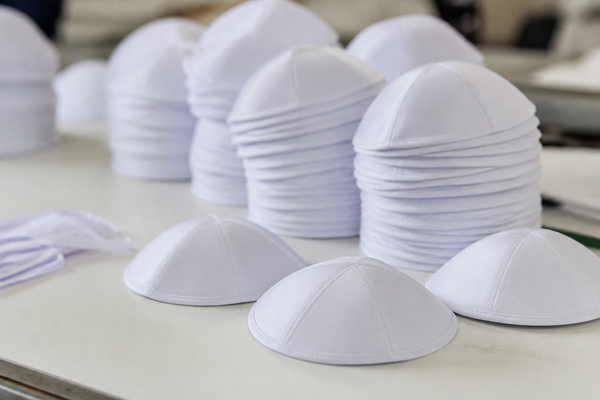
A White Yarmulke usually reads as neat, formal, and institution-ready.
- Daily school wear: a White Yarmulke often fits dress codes that want a clean look across a grade, and staff usually pair it with the right kippah size so it stays put through class, recess, and lunch.
- Camp and summer programs: breathability matters more than color theory, which is why a custom Cotton Yarmulke gets picked for active days, while linen kippah demand rises before warm-weather events.
- Ceremonies: for a siyum, photos, or a school program, white tends to look dressier than a Blue Yarmulke or Beige Yarmulke, and brighter on camera than a Black Yarmulke.
Common uses for a white yarmulke in daily wear and dress settings
In practice, buyers usually keep white for weekday uniforms, guest baskets, and milestone programs. A Cream Yarmulke can hide wear a bit better, while a Wool Yarmulke makes more sense in cooler months.
White yarmulke meaning in practice: uniformity, formality, and clean presentation
Color sends a signal fast. White suggests order and formality—especially in group settings—while a custom kippah or small run of custom yarmulkes helps schools match trim, clips, or fabric to a program without getting flashy.
How age changes the choice from preschool to preteen
Age changes everything. Preschoolers need softer fabrics — simpler finishes; preteens start noticing shape, stitching, and even leather kippah details. For older boys, staff may compare white with a light gray linen yarmulke or even a Wool Yarmulke feel before placing the order.
White Yarmulke Materials That Work Best for Ages 3 to 13
What fabric actually holds up best for a child’s White Yarmulke? The honest answer is that age, season, and schedule matter more than looks alone, and schools usually learn that fast after one week of wear.
Cotton white yarmulke options for long school days and easy care
Cotton is the safe default. A White Yarmulke in cotton stays lighter on the head, washes with less fuss, and works well for children who wear one from morning pickup through late dismissal. For fit, checking kippah size before a bulk order cuts down exchanges.
In mixed school programs, some buyers pair white uniforms with a Blue Yarmulke for teams or class color coding, while others compare a Black Yarmulke, Beige Yarmulke, or Cream Yarmulke for less visible wear. A custom Cotton Yarmulke also makes sense for logos and simple event stamping.
Linen and lightweight fabrics for warmer months and active use
Heat changes everything. Linen breathes better during camp days, outdoor recess, and spring programs — and current linen kippah demand keeps rising for that reason. A light gray linen yarmulke can be a practical backup shade when white feels too bright for daily rotation.
Let that sink in for a moment.
Some buyers ask for a custom kippah run in linen or order custom yarmulkes by grade. Wool Yarmulke styles exist, but they’re usually better saved for cooler weather.
Velvet and dress fabrics for Shabbat, weddings, and milestone events
Dress fabric is for occasion wear. Velvet reads more formal for Shabbat, weddings, and school milestone events, while leather kippah details or satin trims are usually better as accents than daily-use choices for ages 3 to 13.
Fit Comes First: Choosing the Right White Kippah Size, Shape, and Hold
About 8 out of 10 fit complaints come from shape and hold, not fabric. For a White Yarmulke, that matters even more, since ceremony wear often stays on for hours during school programs, a mitzvah, or a wedding.
Flat vs dome white kippah styles for younger children and older boys
A flat profile usually works better on younger children with finer hair, while a dome shape tends to give older boys more coverage and a steadier feel. The right kippah size should sit centered without pinching, and families comparing a Black Yarmulke, Blue Yarmulke, Beige Yarmulke, or Cream Yarmulke should keep shape ahead of color.
When clips, combs, or grip features help a white yarmulke stay on
Grip features help most for active wear. A custom Cotton Yarmulke with clips is often easier for ages 3 to 7, while older boys may prefer combs built into a custom kippah; schools ordering custom yarmulkes should test both before placing volume orders.
- Clips: best for short events and fine hair
- Combs: better for thicker hair and longer wear
- Grip lining: useful for all-day classroom use
How to judge comfort, coverage, and all-day wear without guesswork
Comfort shows up fast—within 20 minutes, a child will tug, tilt, or remove a poor fit. Soft fabrics like a Wool Yarmulke can feel warm, while linen kippah demand keeps rising for spring events; some buyers also compare leather kippah details and a light gray linen yarmulke before settling on a formal White Yarmulke.
White and Black Yarmulke Differences That Matter to Administrators and Parents
Color changes the whole program.
It looks like a small choice, but once a school orders 100 pieces for photos, guests, and weekly wear, mistakes get expensive fast. The answer is simple: a White Yarmulke usually reads cleaner in ceremonies, while a Black Yarmulke hides wear better in daily rotation.
White vs black yarmulke for uniforms, photos, and guest stock
For uniforms and guest shelves, white shows every wrinkle—yet it also looks brighter in class pictures, on stage, and at a mitzvah. Black is lower-maintenance, while a Beige Yarmulke, a Cream Yarmulke, or a Blue Yarmulke can soften the look for mixed-age groups without losing formality.
Which ages do better with a softer structure, and which need a cleaner shape
Ages 3 to 7 usually do better in softer cotton or light linen, since comfort beats stiffness every time (especially during long school mornings). Ages 8 to 13 tend to keep a cleaner profile, so a better-defined crown, a checked kippah size, and even a Wool Yarmulke for colder months can keep the shape neat.
Worth pausing on that for a second.
- Younger children: softer structure, lighter fabrics
- Older children: cleaner shape, stronger edge hold
Custom order choices for logos, embroidery, and bulk consistency
Bulk buying works best with one fabric, one stitch color, and one approved sample—otherwise, reorders drift. Administrators comparing a custom Cotton Yarmulke, a custom kippah, custom yarmulkes, leather kippah details, linen kippah demand, and a light gray linen yarmulke should ask for one thing first: consistency across cartons, not just style on one sample.
How to Buy White Yarmulkes Online in Quantity Without Costly Mistakes
A school office placed a 120-piece order for a spring ceremony, and two weeks later, the shipment arrived with mixed shades, uneven clips, and sizing that skewed too small. That kind of miss costs time, return freight, and trust. The fix is a tighter buying process before any White Yarmulke bulk order goes through.
What to check before placing a bulk order for schools, camps, or simchas
Start with a written spec sheet—fabric, panel count, clip style, and exact shade. A White Yarmulke can sit close to a Cream Yarmulke or Beige Yarmulke in screen photos, so buyers should ask for daylight images and one mailed sample. If a supplier also offers a Blue Yarmulke, Black Yarmulke, custom Cotton Yarmulke, Wool Yarmulke, or light gray linen yarmulke, compare white lots against those ranges to spot cast and fabric drift.
Stock planning by age band: ages 3 to 5, 6 to 9, and 10 to 13
Use age bands, not one-size ordering. For kippah size planning, a practical split is:
- ages 3 to 5: order 30% small
- ages 6 to 9: order 45% medium
- ages 10 to 13: order 25% large
Realistically, ceremony programs and camp color days shift demand fast—especially where linen kippah demand rises in warm months or where a custom kippah is used for a bar mitzvah group.
Think about what that means for your situation.
Quality-control details buyers should confirm before reordering during the season
Before reordering, confirm three points: shade match, stitch consistency, and attachment method. Buyers sourcing custom yarmulkes should also ask for retained swatches, carton counts, and notes on leather kippah details if trim or rim options are part of the program. One saved sample from each run. That’s what prevents repeat mistakes.
Frequently Asked Questions
What does a white yarmulke mean?
A white yarmulke usually signals occasion, dress code, or community custom rather than one fixed religious meaning. In practice, white is common for weddings, holiday meals, school events, — formal daytime ceremonies because it reads clean, bright, and dressy.
What does a white kippah mean?
A white kippah means different things in different settings. Sometimes it marks a festive event, sometimes it matches a uniform, and sometimes it’s just the preferred color for summer wear or guest seating—simple as that.
What does a white yamaka mean?
“Yamaka” is a common spelling people use online for yarmulke. A white yamaka usually refers to the same item as a white kippah: a head covering chosen for tradition, ceremony, comfort, or coordinated appearance.
What is the difference between a white and a black yarmulke?
The main difference is visual tone and community preference, not basic function. A black yarmulke often looks more formal, daily, or understated, while a white yarmulke feels lighter and is often picked for a wedding, bar mitzvah, guests, choir groups, or warm-weather use.
Does the color of a yarmulke mean anything?
Sometimes yes, — not in a universal way. Color can reflect school policy, synagogue practice, family taste, event planning, or material choice, so a white yarmulke doesn’t carry one official meaning across every congregation.
That gap matters more than most realize.
Is a white yarmulke appropriate for a wedding or bar mitzvah?
Yes, and it’s one of the safest choices.
White works well for guest baskets, coordinated table settings, and dress clothing, especially if the order includes satin, linen, cotton, or velvet options with custom text inside.
Which material works best for a white yarmulke?
That depends on how it’ll be used. Cotton and linen feel lighter for long wear, velvet looks richer for formal events, and satin gives a polished finish that photographs well (which matters more than people admit).
Do white kippahs get dirty faster?
Yes. That’s the tradeoff. White kippahs show makeup, hair product, dust, and handling marks faster than darker colors, so institutions ordering in quantity usually do well with washable fabrics or a slightly off-white shade.
Can a white yarmulke be custom-ordered in bulk?
Absolutely. Bulk orders often include imprinting for weddings, school programs, camps, memorial events, and synagogue use, with choices on fabric, size, lining, edge finish, and clips if extra hold is needed.
The difference shows up fast.
How should a school or synagogue choose the right white yarmulke?
Start with purpose before style: daily uniform wear, guest use, or one-time ceremony. [redacted] look at three things—fabric, fit, and replacement cycle—because a white yarmulke that looks great for one Shabbat program may not be the right pick for weekly institutional use, as noted by iKIPPAHS.
The right White Yarmulke does more than complete a dress code. For schools, camps, and event planners, it affects comfort during long wear, consistency across age groups, and the polished look families notice right away. A three-year-old usually needs something softer and more forgiving, while an older child often does better with a cleaner shape that stays put through davening, meals, line-up, and photos — that age split matters more than color alone.
Material matters too. Cotton is usually the easiest choice for daily programs, lighter fabrics make sense for warm-weather use, and velvet or dress options fit formal settings where presentation counts.
A smart next step is simple: build the order list by age band, request one sample in each planned material and shape, and test them for fit and stay-on performance before placing the full quantity. That extra step saves time, budget, and avoidable returns.


