Rising food, construction, and pharma demand transform Brazil’s propylene glycol market, driving sustained growth through 2036
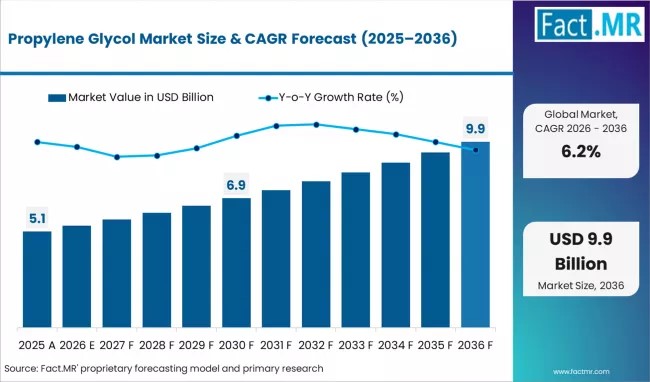
ROCKVILLE, MD, UNITED STATES, April 17, 2026 /EINPresswire.com/ — According to Fact MR’s latest analysis, Brazil’s propylene glycol market is gaining strategic prominence within the broader global landscape, driven by expanding industrial applications and tightening quality specifications. The global market is valued at USD 5.45 billion in 2026 and is projected to reach USD 9.94 billion by 2036, growing at a CAGR of 6.2%. Within this, Brazil is expected to register a 6.1% CAGR, creating a significant incremental opportunity as demand accelerates across food processing, construction, and pharmaceutical sectors.
The market’s transformation is anchored in Brazil’s shift toward higher-value applications, increasing adoption of USP-grade products, and a growing focus on supply chain reliability. Domestic consumption patterns are evolving from commodity-driven procurement to performance-based sourcing, particularly in regulated industries.
Get detailed market forecasts, competitive benchmarking, and pricing trends: https://www.factmr.com/connectus/sample?flag=S&rep_id=4175
Quick Stats Section
Market Size (2026):USD 5.45 Billion (Global benchmark)
Forecast Value (2036):USD 9.94 Billion
Brazil CAGR (2026–2036):1%
Incremental Opportunity:High growth driven by food & construction demand
Leading Segment:Industrial Grade (63% share)
Leading Source:Petroleum-based (71% share)
Leading Country (Region):Brazil (Latin America leader)
Key Players:Dow Inc., BASF SE, ADM, INEOS, Shell Plc
Executive Insight for Decision Makers
Brazil’s propylene glycol market is transitioning toward application-specific procurement and regulatory compliance-driven demand.
Strategic Shift:Buyers are prioritizing consistent quality, certification, and supplier reliability over price alone.
Action Imperative:
Invest in USP-grade and food-grade production capabilities
Strengthen distribution networks across industrial hubs
Align with sustainability trends through bio-based offerings
Risk of Inaction:Suppliers relying solely on commodity-grade positioning risk losing contracts with large food and pharmaceutical manufacturers.
Market Dynamics
Key Growth Drivers:
Expansion of Brazil’s food processing industry, driving USP-grade demand
Increasing construction activitysupporting industrial-grade consumption
Growth in pharmaceutical manufacturingrequiring high-purity inputs
Rising demand for multi-functional chemical intermediates
Key Restraints:
Volatility in propylene oxide raw material prices
Competition from ethylene glycol and glycerol
Regulatory complexities in food and pharma applications
Emerging Trends:
Accelerated adoption of bio-based propylene glycol
Shift toward performance-certified suppliers
Integration of sustainable sourcing strategies
Growing demand for application-specific formulations
Segment Analysis
Leading Segment:Industrial Grade (~63% share)
Dominates due to construction composites and industrial applications
Fastest-Growing Segment:USP Grade
Driven by food, pharma, and personal care industries
By Source:
Petroleum-based leads with ~71% share due to cost efficiency
Bio-based gaining traction in sustainability-focused applications
By End-use:
Construction (largest share)
Food & Beverages (fastest growth in Brazil)
Pharmaceuticals and Personal Care (premium segment growth)
Strategic Importance:
USP-grade expansion is critical for suppliers targeting high-margin sectors in Brazil.
Supply Chain Analysis (Critical Insight)
Brazil’s propylene glycol supply chain is increasingly structured and performance-driven:
Raw Material Suppliers:Propylene oxide producers (petrochemical firms)
Manufacturers:Global players and regional chemical producers
Distributors:Chemical distributors and specialty suppliers
End-users:
Food processors (USP-grade)
Construction material manufacturers (industrial-grade)
Pharmaceutical companies
Who Supplies Whom:
Global manufacturers supply bulk propylene glycol to regional distributors, who then serve food processors and construction firms. Direct supply agreements are growing between large producers and pharmaceutical companies requiring certified grades.
Pricing Trends
Commodity vs Premium:
Industrial grade operates as a semi-commodity
USP-grade commands premium pricing
Key Influencing Factors:
Feedstock (propylene oxide) costs
Regulatory certifications (USP, food-grade)
Supply chain reliability
Import dependency
Margin Insights:
Higher margins in pharmaceutical and food-grade segments
Commodity segments face pricing pressure
Regional Analysis
Top Countries by CAGR (2026–2036):
China – 7.4%
India – 7.0%
USA – 6.6%
Germany – 6.4%
Brazil – 6.1%
Brazil Growth Drivers:
Strong food processing base
Expanding construction sector
Increasing pharmaceutical production
Developed vs Emerging Markets:
Developed markets focus on bio-based and high-purity products
Brazil and emerging economies focus on volume growth with gradual premiumization
Competitive Landscape
Market Structure: Moderately consolidated
Key Players:
Dow Inc.
BASF SE
ADM
INEOS
Shell Plc
Huntsman International LLC
LyondellBasell
Competitive Strategies:
Capacity expansion in Latin America
Investment in bio-based production
Strengthening distribution partnerships
Enhancing technical service capabilities
Strategic Takeaways
For Manufacturers:
Focus on USP-grade and bio-based production
Build local partnerships for distribution
For Investors:
Target food-grade and pharma-grade segments
Invest in regional production capacity
For Distributors:
Expand reach in industrial clusters
Offer value-added services and compliance support
Future Outlook
Brazil’s propylene glycol market is set to evolve into a high-value, application-driven ecosystem. Sustainability will play a defining role, with bio-based products gaining traction alongside regulatory-driven demand.
Long-term growth will be supported by:
Expansion in processed food consumption
Rising infrastructure investments
Growth in pharmaceutical manufacturing
Conclusion
Brazil is positioning itself as a strategic growth hub within the global propylene glycol market, supported by diversified end-use demand and evolving procurement practices.
For decision-makers, the opportunity lies in aligning with quality standards, supply reliability, and sustainability trends. Companies that invest in performance-driven offerings and localized strategies will capture the next phase of growth in this transforming market.
Why This Market Matters
Propylene glycol is a critical industrial and consumer chemical, enabling performance across food safety, construction durability, and pharmaceutical formulation. Brazil’s rising demand underscores its importance as a high-growth, strategically relevant market in Latin America’s chemical industry landscape.
Unlock 360° insights for strategic decision making and investment planning: https://www.factmr.com/checkout/4175
To View Related Report:
Propylene Glycol Methyl Ether Acetate Market https://www.factmr.com/report/propylene-glycol-methyl-ether-acetate-market
Propylene Glycol Ether Market https://www.factmr.com/report/propylene-glycol-ether-market
Dipropylene Glycol N-Propyl Ether Market https://www.factmr.com/report/dipropylene-glycol-n-propyl-ether-market
Inhibited Propylene Glycol Market https://www.factmr.com/report/inhibited-propylene-glycol-market
About Fact.MR
Fact.MR is a global market research and consulting firm, trusted by Fortune 500 companies and emerging businesses for reliable insights and strategic intelligence. With a presence across the U.S., UK, India, and Dubai, we deliver data-driven research and tailored consulting solutions across 30+ industries and 1,000+ markets. Backed by deep expertise and advanced analytics, Fact.MR helps organizations uncover opportunities, reduce risks, and make informed decisions for sustainable growth.
S. N. Jha
Fact.MR
+ +1 628-251-1583
sales@factmr.com
Legal Disclaimer:
EIN Presswire provides this news content “as is” without warranty of any kind. We do not accept any responsibility or liability
for the accuracy, content, images, videos, licenses, completeness, legality, or reliability of the information contained in this
article. If you have any complaints or copyright issues related to this article, kindly contact the author above.

Media gallery