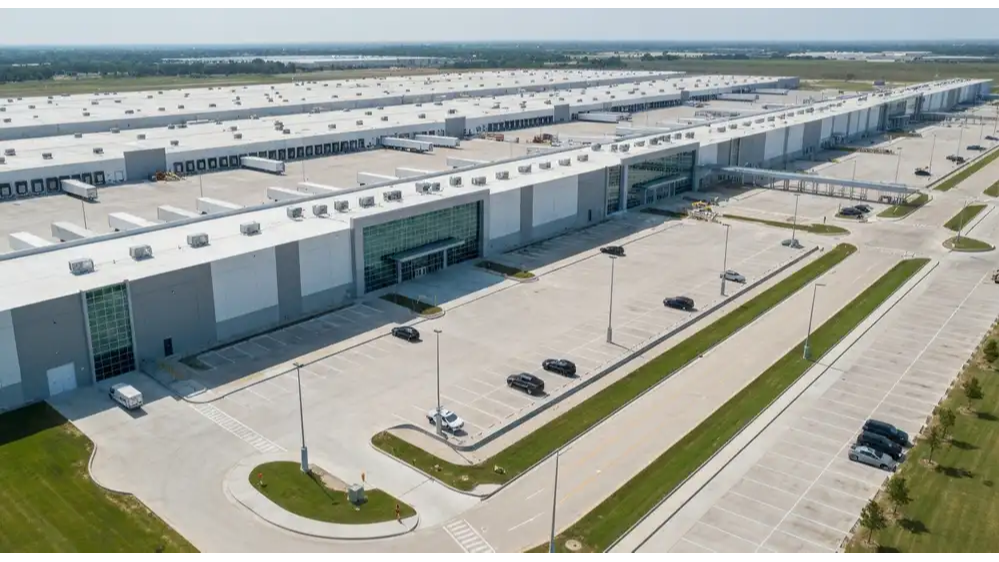
Texas employers in the warehouse and supply chain sector are rethinking what it means to hire the right worker. As robotics, automated picking systems, and warehouse management software become standard features of modern distribution centers, the human skillset required to keep operations running has shifted — and staffing strategy has to shift with it.
Texas has positioned itself as one of the country’s premier logistics corridors, driven by its major ports, interstate infrastructure, and steady population growth. E-commerce expansion, nearshoring initiatives, and reshoring of manufacturing operations have added sustained pressure on distribution networks across Dallas-Fort Worth, Houston, San Antonio, and Central Texas. The result is a labor market where demand for warehouse and supply chain workers remains high, but the profile of a competitive candidate is changing.
Automation has not eliminated warehouse jobs. Rather, it has raised the bar for who fills them. Workers who can operate alongside robotic systems, troubleshoot warehouse technology, and adapt to updated workflows are now in shorter supply than those filling traditional roles. Certifications such as forklift operation, OSHA safety training, and inventory management experience have moved from preferred to expected. For supervisory and managerial candidates, data literacy and process optimization are emerging as baseline requirements rather than differentiators.
Employers are also facing familiar structural challenges that automation alone cannot solve. High turnover, fluctuating seasonal demand, safety compliance responsibilities, and persistent skill gaps continue to complicate workforce planning. Bringing a distribution center online or scaling operations for a peak period means having a reliable pipeline of screened, safety-conscious candidates ready — not weeks from now, but this week.
This is where supply chain and logistics staffing partners play a critical operational role. Firms with active talent pipelines and documented screening processes reduce time-to-fill significantly and help employers avoid the costly downtime that comes with understaffed automated environments. The ability to scale a warehouse and light industrial workforce up or down quickly — without sacrificing candidate quality — has become a competitive advantage for Texas employers.
Burnett Specialists, Texas’ largest employee-owned staffing firm, has spent more than five decades building and maintaining talent pipelines across the state’s logistics markets. As an ESOP company, its recruiters operate with a long-term investment in client outcomes. The firm’s supply chain and light industrial teams work across Houston, Dallas, San Antonio, Austin, El Paso, and The Woodlands, matching employers with workers who meet today’s evolving technical and safety standards.
As Texas employers look ahead to 2026, workforce planning that accounts for automation integration, safety programs, and talent retention is separating high-performing operations from those struggling to keep pace. Content developed in partnership with Houston digital marketing agency ASTOUNDZ.
Burnett Specialists
JessicaW@burnettspecialists.com
+1 713 977 4777
9800 Richmond Ave, Ste 800
Houston
TX
77042
United States