Bethany Baker // The Salt Lake Tribune
Dozens of workers join lawsuit against Traeger Grills as the Utah company makes a major pivot
Kevin Quinn went to London expecting to do what he did best â pitch Traeger Grillsâ âwood-fired flavorâ to shoppers the way he had countless times at American Costco stores, drawing people in with the welcoming smell of wood pellets and the promise of backyard grill mastery.
Instead, he said, he found himself in a taxing routine: twelve-hour days at a Costco, an hour-long commute each way to his hotel and three days of travel that were unpaid.
After three weeks of pitching Traeger grills â demonstrating how to use their pellets, rubs and sauces and sharing the cooking camaraderie the company celebrates as the âTraegerhoodâ â he sold just six grills, he said, and went home with $963 for 252 hours of work.
âI nearly went broke,â said Quinn, of Kansas City, Missouri, who worked for Traeger for three years. He was âexcitedâ to go to England, he said, but then learned its typically small back yards made premium grills a tough sell. âIt was the best of my trips and the worst of my trips.â
That 2022 experience prompted him to become one of 70 former and current Traeger brand ambassadors who have joined a proposed class-action lawsuit against the company, according to court records reviewed by The Salt Lake Tribune.
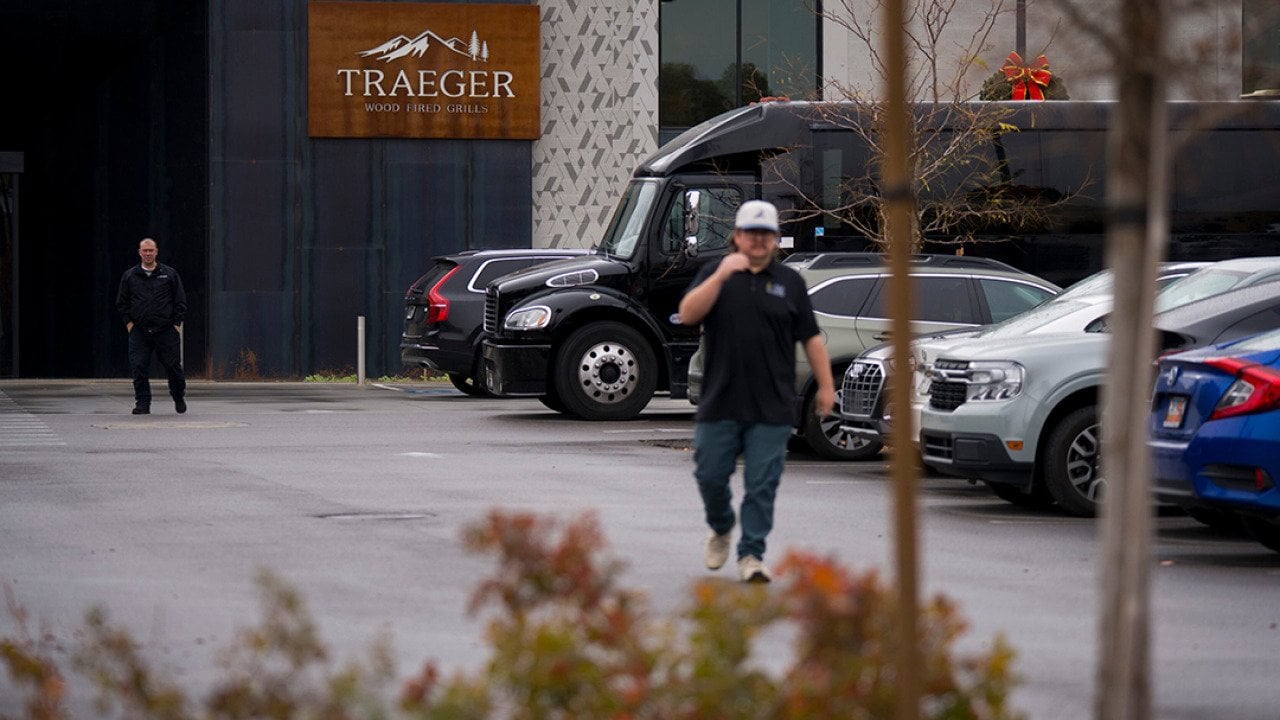
The lawsuit lands at a pivotal moment for Traeger, which is shutting down the very sales channels those ambassadors helped build as it looks to transform into a leaner business âso that we can really do the right thing for the brand long term,â CEO Jeremy Andrus said in a November conference call for investors.
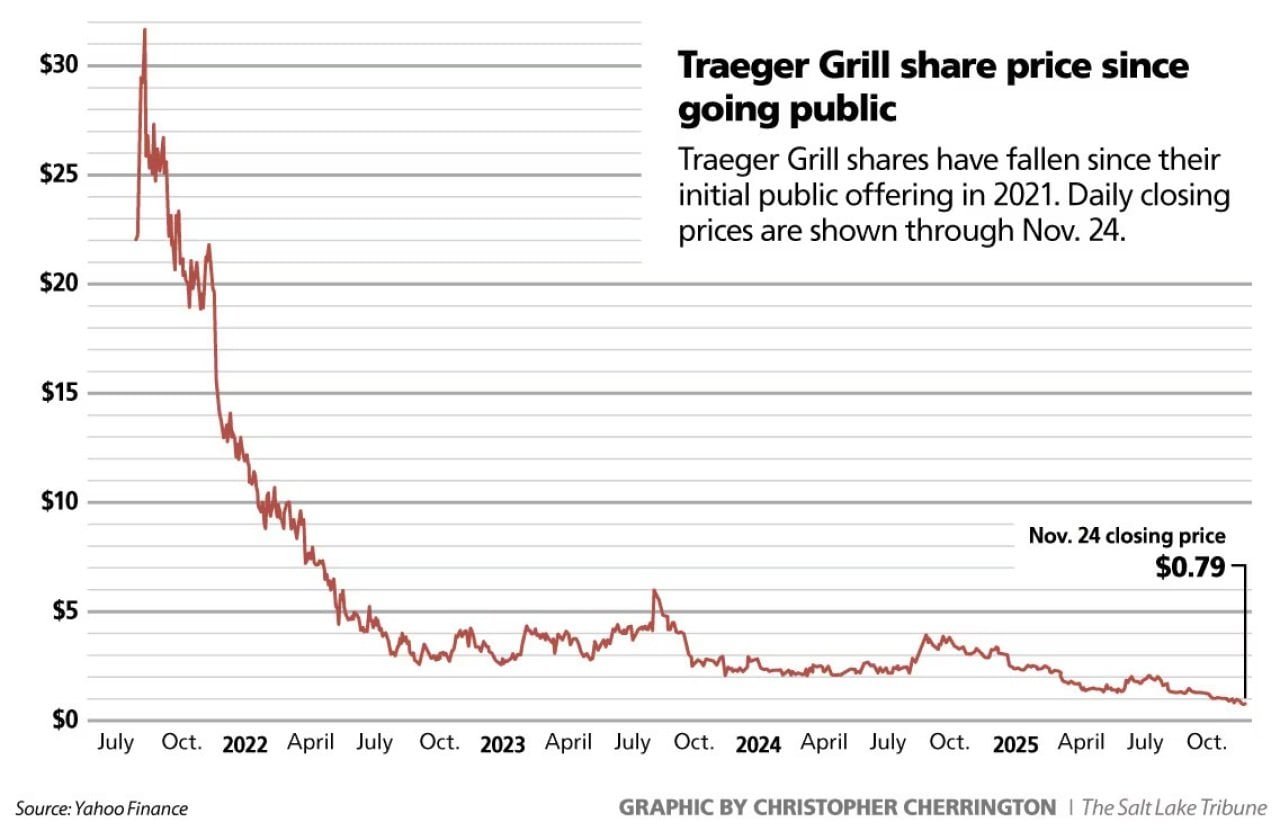
The price of Traegerâs stock â traded as COOK â has plummeted since Andrus took the company public in 2021, falling from more than $31 per share to about 78 cents per share as of late November.
Christopher Cherrington // The Salt Lake Tribune
As part of a sweeping restructuring, Traeger is ending the once-signature Costco roadshows by yearâs end and also will stop selling directly to consumers on its website. It will send shoppers to retail channels â as it currently does with Amazon and The Home Depot, according to a November filing with the Securities and Exchange Commission.
Itâs a dramatic shift for the brand that began as a regional grill business out of Oregon before being purchased, relocated to Utah and reinvented by Andrus into a social media-savvy company with a national following.
Rick Egan // The Salt Lake Tribune
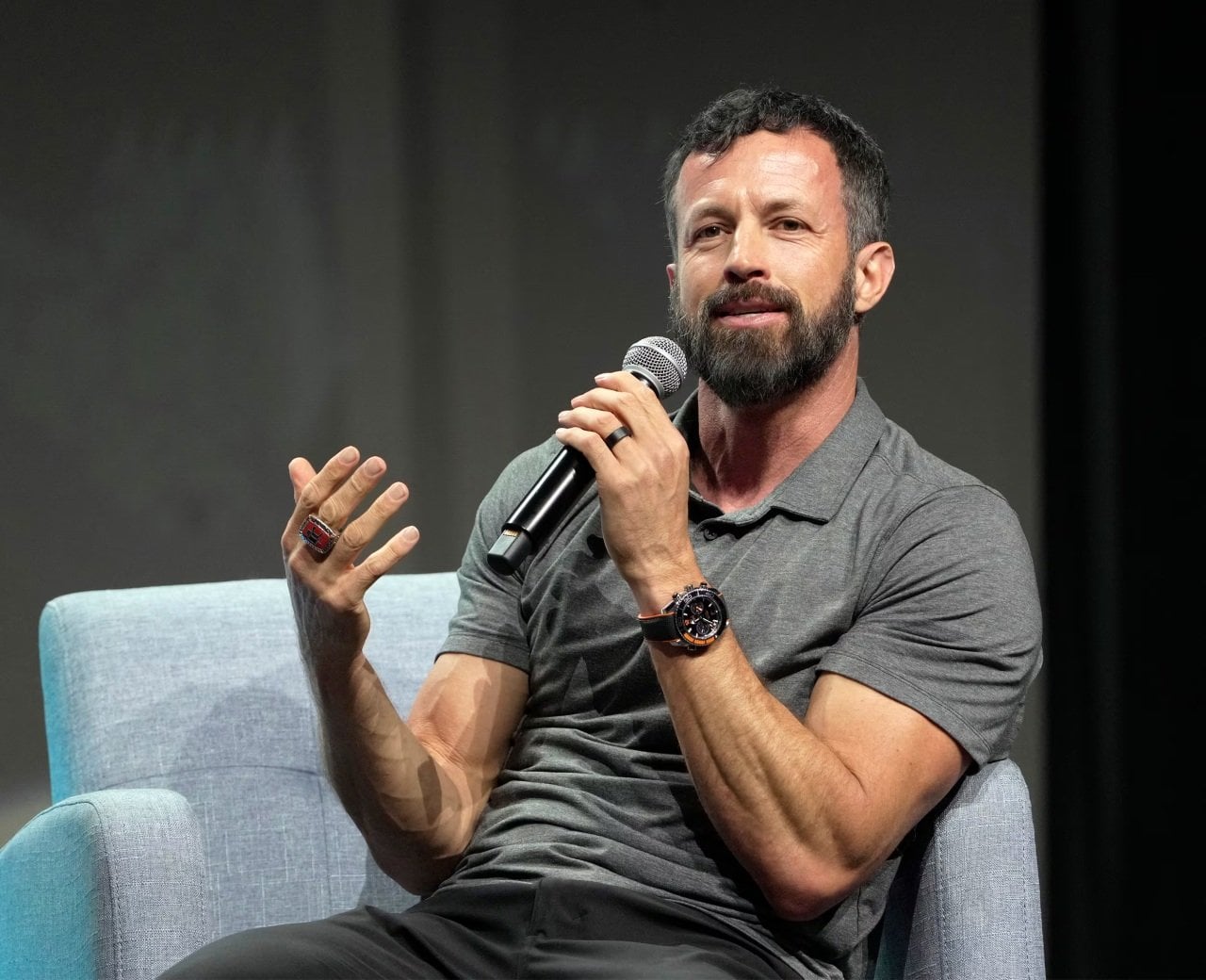
Andrus, above, is celebrated in Utahâs Silicon Slopes tech community for driving Traegerâs transformation and, before that, helping to take Park Cityâs Skullcandy from a tiny headphones startup to a publicly traded company with millions in revenue from its lifestyle brand.
On Nov. 20, Utah Gov. Spencer Cox appointed Andrus to the Governorâs Office of Economic Opportunity (GOEO) board, which, among other roles, votes on tax break incentives for Utah companies.
Both Skullcandy and Traeger have received such deals. In 2014, GOEO said it would allow Traeger to claim up to $503,537 in tax rebates in installments if it provided 164 jobs over seven years. Another incentive extended in 2020 is worth up to $882,430 in rebates for 120 jobs over seven years.
But Traeger has earned between zero and 25% of each potential rebate, according to the state. In 2022, it laid off at least 14% of its global workforce and shut down Traeger Provisions, its meal kit business.
The ambassadors claim Traeger has misclassified them as âexemptâ employees â typically salaried workers not eligible for overtime. Arizona-based worker Aaron Cicero, who filed the lawsuit in October, said Traeger pays him using a formula tied to the amount of sales during road shows, which he argues violates federal law by failing to ensure minimum wage and denying overtime pay.
Aaron Vance, who worked as a brand ambassador from Tennessee for about seven years and has joined the lawsuit, said Traeger wasnât open about how that formula was calculated. Sales goals were set differently for each employee before each roadshow, he said, and those benchmarks determined how much they earned in commission.
âIf [adding] my name helps correct for other people and give other people compensation ⦠then I feel like itâs the right thing to do,â Vance said. âI think people are owed money, and I think itâs time that Traeger owned up to that.â
Traeger has not yet responded to the complaint and was granted an extension until Dec. 17, court records show. The Salt Lake City attorneys representing Traeger did not respond to requests for comment from The Salt Lake Tribune. Traeger and Andrus did not respond to emails seeking comment.
âSacredâ road shows
Andrus acquired Traeger in 2014 with private equity partner Trilantic Capital Partners while looking for âwhat might be nextâ after growing Skullcandy, he told Forbes in 2021.
âI recognized very quickly there was something special to Traeger,â Andrus told Forbes. âWithout a marketing department, there was this small, self-organized community of passionate Traeger owners who really identified themselves with Traeger.â
Once he took over, the new Costco roadshows were a powerful driver for national brand recognition, he said during the November call.
When the COVID-19 pandemic hit, âmoney just fell out of the skyâ for the ambassadors, said Quinn, who started at Traeger in 2020. With people spending more time at home, grill sales were booming, he said, and the excitement around the product was contagious.
But more recently, Andrus said on the November call, âItâs been a challenging few years coming out of the pandemic.â
He described Traegerâs two paths to change: reducing its exposure to tariffs and a cost-cutting plan called âProject Gravity.â
Their strategies include diversifying production away from China; using distributors for sales in Europe; using the company website for storytelling rather than as a sales channel and various cost-cutting measures to create a smaller but âmore profitableâ business, Andrus said on the call.
Traeger has spent $9.7 million on restructuring so far, mostly on professional fees, with $3.3 million going to severance and other staffing costs, according to the quarterly SEC filing that covered the period ending on Sept. 30.
Andrus told brand ambassadors on an October company call that the roadshows had become âincreasingly unprofitableâ in recent years, a trend that accelerated after international tariffs were announced in April by President Donald Trump.
âTariffs sort of were the last piece that really, really changed the financial profile of the program,â Andrus said in a recording of the meeting, which Quinn shared with The Salt Lake Tribune.
The economic pressures have forced Traeger to revisit even the roadshows, which Andrus has considered âsacred,â he said on the November investor call, requiring the company to ask, âWhat is the better way to drive the business going forward?â
Cole VandenAkker, Traegerâs chief sales officer, said on the staff call that the company is offering retention and separation packages to encourage some employees to continue with the program through the end of the year.
The incentives, outlined in an October retention agreement shared with The Tribune by a brand ambassador who requested anonymity due to ongoing employment, are contingent on workers waiving âany claimsâ they âmay have against the Company,â the agreement states.
Ending the road shows was ânot an easy decision, especially given the blood, sweat and tears from this team and what this program has meant to the organization,â VandenAkker said on the call.
Phase 1 of Project Gravity is expected to save $30 million, mainly from layoffs and consolidating operations, according to a November news release. An additional $20 million in Phase 2 savings will come from ending the roadshows â though grills will be still available through Costco â and halting direct to consumer sales.
âI made great moneyâ
Traegerâs brand ambassadors shared techniques like slow smoking and using the companyâs signature pellets through their demonstrations. The workplace culture was âgreat,â with camaraderie and friendships among coworkers that were infectious, Vance said.
Each year, management sent gifts around Christmas, Vance said, and he recalled a time after the pandemic when the business was struggling and Andrus sent cash to each ambassador.
âIt was just because he wanted to say, hey, thank you. I think it was three or 400 bucks per person,â Vance said. âSo, he had to pull out a lot to pay us, because there were 140 of us at the time.â
But some ambassadors got lower sales goals â sometimes at the same stores â while others received higher benchmarks that made it harder to reach better commission tiers, ambassadors said.
âI really was good at my job, and I made great money,â Vance said, âbut there was plenty of times that I made a lot less than I should have because Iâd break a record and make 10% (commission) and the next person that went to that store would do half the amount of what (sales) I did and make 18%.â
Marco Lopez, a former brand ambassador from Oregon who joined the lawsuit, said goals could be adjusted after an event, leaving workers waiting days to know what theyâd earned.
âI feel like I have other people that are controlling my income,â Lopez said, âand it was causing a lot of stress and my anxiety for myself, and I know very many others.â
For Quinn, a longtime Traeger fan, leaving wasnât easy. He had marked the company going public by getting his first-ever tattoo â a hog thatâs a nod to a pink neon sign sometimes used by Traeger that plays on the phrase âwhen pigs can fly,â he said.
The company also formerly sold a Lilâ Pig grill, marketed with the tagline: âThis little piggy sure can carry its weight.â
âThe product, the brand. I love it,â he said. âI would have never left Traeger, but Iâm glad I did.â
Vance felt the same way. âEven when I was off the clock and at home, I loved telling people about the product and what I did,â Vance said. â… Sometimes just a hard situation, like this, is what it takes to change something.â
This story was produced by The Salt Lake Tribune and reviewed and distributed by Stacker.