Selecting a Long-Lasting Memorial for the Cold Season: Understanding Granite Strength
Darlington, United States – December 16, 2025 / Blackmon Memorials /
Winter is an often-overlooked season for memorial planning, yet it offers practical advantages for families who want thoughtful choices and smoother scheduling for monuments. This guide explains why winter pre-planning can ease emotional burdens, how material choices—especially durable granite—stand up to freeze-thaw cycles, and which customization and care steps keep inscriptions legible through snow and frost. You will learn concrete comparison points for granite, marble, and bronze, step-by-step winter inspection and maintenance, and personalization options that remain resilient in cold climates. The article maps four core areas: the benefits of winter pre-planning, a materials durability comparison, durable customization techniques, and essential winter care actions. By the end you’ll have a clear decision framework for selecting a winter-ready monument and practical next steps to schedule design and installation for optimal weather windows.
Why Is Winter the Best Time for Memorial Pre-Planning?
Winter pre-planning is the process of deciding monument design, materials, and installation schedule during the quieter off-season to secure better availability and thoughtful decisions. Planning in winter reduces time pressure on families, gives artisans longer lead time to execute custom designs, and helps reserve spring installation dates before cemeteries fill. Early planning also allows for financial pacing and comparisons without the rush common in peak months. These operational and emotional advantages make winter an efficient window to finalize memorial choices and prepare for spring site work.
What Are the Emotional and Financial Benefits of Winter Pre-Planning?
Planning a monument in winter reduces reactive decision-making and provides emotional space for families to reflect on meaningful wording and imagery. Financially, winter consultations often allow more time to compare material options and payment arrangements and to avoid expedited fees tied to last-minute orders. Taking time now often lessens family stress later and avoids hurried compromises on inscription wording or design details. This calmer planning period leads naturally into scheduling and installation choices that protect the monument’s long-term integrity.
How Does Winter Timing Ensure Better Customization and Installation Availability?
Winter timing opens access to skilled artisans and scheduling windows for spring installation when ground conditions improve, which is crucial for proper foundation work. With extended lead time, workshops can prioritize deeper engraving, complex carving, and bespoke inlays without the pressure of peak-season backlogs. Secure winter planning also gives cemetery crews and installation teams flexibility to coordinate foundation excavation and drainage for frost-prone soils. Reserving those installation slots ahead of spring reduces the risk of rushed foundations that contribute to frost heave later.
Which Monument Materials Are Most Durable for Winter Conditions?
Granite is the premier choice for winter monuments because its hardness, low porosity, and color stability resist freeze-thaw damage and surface erosion. Marble weathers more quickly in acidic or heavily freeze-thaw environments due to higher porosity and softer composition, reducing long-term legibility. Bronze plaques are durable against cracking but develop patina and require attachment and drainage attention to avoid moisture-related issues. Understanding these material behaviors helps match aesthetic goals to climate resilience and maintenance expectations.
Granite, marble, and bronze differ in winter performance in measurable ways; below summarizes durability, porosity, and maintenance needs to help compare choices quickly.
Granite
-
Durability: High
-
Porosity: Low
-
Maintenance: Minimal cleaning; resists freeze–thaw cycles and retains its finish well.
Marble
-
Durability: Medium
-
Porosity: Medium
-
Maintenance: Sensitive to acidic cleaners; surface may erode in wet freeze–thaw conditions.
Bronze
-
Durability: High (structural)
-
Porosity: Not applicable (metal)
-
Maintenance: Requires periodic cleaning and mount inspections to manage patina and ensure proper drainage.
This comparison shows granite’s overall superiority for cold, wet climates and clarifies trade-offs when choosing marble or bronze accents. The next section examines why granite performs this way and how to specify it for winter resilience.
Why Is Granite the Premier Choice for Winter Monuments?
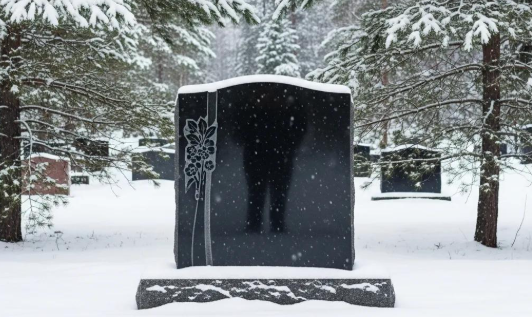
Granite resists cracking and surface degradation because its interlocking mineral grains create mechanical strength and very low water absorption. That low porosity limits water penetration that would otherwise freeze and expand inside the stone, which prevents many forms of freeze-thaw damage. Granite also accepts deep engraving and polishing that maintain legibility through snow and road salt exposure. Selecting dense, fine-grain granites and specifying deeper sandblasted or carved lettering optimizes longevity in cold, wet environments.
The mechanical properties of granite can be demonstrably affected by repeated freeze-thaw cycles, underscoring the importance of material selection for longevity in fluctuating climates. The impact of freeze-thaw cycles on granite’s mechanical properties is a well-documented phenomenon, with studies showing a decline in these properties after repeated exposure.
How Do Marble and Bronze Compare for Cold Weather Durability?
Marble is valued for its appearance but tends to absorb pollutants and water that accelerate surface etching and letter fading in freeze-thaw settings. Cleaning marble with neutral pH products and avoiding acidic agents helps, but marble still requires closer monitoring in winter climates. Bronze plaques remain structurally sound but develop protective patina; designers must ensure secure mounting and adequate drainage behind metal elements to prevent moisture trapping. Choosing the right use-cases—granite monuments with bronze accents, for example—balances aesthetics and performance.
How Can You Customize Your Winter Monument to Reflect a Unique Legacy?
Customization balances meaningful design with durability: deeper engraving, high-contrast finishes, and protected inlays keep inscriptions and imagery readable after snow and ice exposure. Design choices like recessed plaques, raised lettering, or bronze inlays affect long-term legibility and weather performance, so specifying techniques that prevent water pooling and protect fine detail is essential. Thoughtful motifs—seasonal or personal—can be rendered in ways that survive harsh winters when combined with durable carving methods and proper placement. Below are practical design elements mapped to their durability impacts.
Deep sandblasted engraving is used for the primary inscription and helps preserve legibility by resisting ice or debris buildup.
A bronze plaque inset is placed as an accent panel, offering durable highlighting while avoiding edge exposure when recessed.
Low-relief carving is used in imagery panels and maintains its form during freeze cycles when carved into solid stone.
This how-to summary clarifies that protective placement and depth choices preserve both detail and meaning through winter weather. The following list highlights specific engraving and embellishment approaches suited to snowy climates.
Engraving and embellishment options ideal for winter memorials include deeper sandblast lettering, polished vs. honed contrast finishes, and recessed plaque installation. Each option supports legibility, reduces water infiltration into fine details, and helps prevent ice-driven erosion. Choosing fonts with thicker strokes and avoiding extremely fine filigree in exposed areas further improves long-term readability. These design choices lead into how seasonal imagery can be tastefully incorporated without compromising durability.
What Design and Engraving Options Are Ideal for Winter Memorials?
For winter resilience, prefer deeper sandblasted or carved lettering that resists snow fill and abrasion and choose high-contrast finishes that remain visible in low light and snowy backgrounds. Avoid very fine script or shallow etching on surfaces exposed to runoff and road salt. Combining deeper engraving with inlaid finishes or recessed bronze panels protects detail from direct weathering. These specifications allow monuments to preserve wording and imagery while maintaining the desired aesthetic.
How Can Winter-Themed Imagery Enhance Your Monument’s Personalization?
Winter-themed motifs—such as evergreen sprigs, subtle snowflake accents, or horizon lines—can convey seasonal meaning while remaining simple enough for durable carving. Placing such imagery in protected panels or using low-relief carving retains silhouette clarity even after snowfall. Selecting motifs with bold, uncomplicated lines ensures that details do not trap moisture or ice. Thoughtful placement and carving depth preserve these symbols as lasting expressive elements.
What Are Essential Winter Care Tips to Protect Your Monument?
Regular, seasonal maintenance reduces long-term freeze-thaw damage and preserves inscriptions and finishes. A pre-winter inspection should check foundations, joints, and attachments for cracks or instability and remove biological growth that can retain moisture. Safe cleaning avoids high-pressure washers and acidic cleaners—use gentle, stone-appropriate products and soft brushes. Finally, address drainage and soil stability proactively to prevent frost heave and shifting that compromise a monument’s foundation.
-
Granite:
-
Check for hairline cracks and ensure the base is stable.
-
Use a mild, pH-neutral cleaner and a soft brush; verify proper drainage around the area.
-
Marble:
-
Inspect for surface etching and any biological stains.
-
Clean with a neutral cleaner, avoid acidic agents, and finish with a gentle rinse.
-
Bronze:
-
Verify that mounts are secure and check for proper drainage behind the plaque.
-
Use a non-abrasive metal cleaner; inspect fasteners and sealants for wear.
This list helps owners prioritize work so monuments enter winter in stable condition.
The next list provides a concise, actionable checklist for pre-winter care that is suitable for homeowners and cemetery caretakers.
-
Inspect foundation and base for movement, cracks, or tilting.
-
Clean surfaces with pH-neutral products and remove moss or lichen gently.
-
Ensure site drainage directs water away from the base and does not pool.
-
Tighten or document the condition of metal mounts and inlays; schedule repairs if loose.
Completing these steps makes spring inspections simpler and reduces long-term repair needs. If you discover foundation instability or persistent drainage problems, arrange a professional assessment rather than temporary fixes.
For families in Darlington, SC and surrounding areas seeking material recommendations, handcrafted engraving, or help scheduling installations to avoid frost-related issues, local monument specialists can advise on granite varieties, deep-engraving techniques, and foundation specifications. Choosing a provider who manages sourcing, carving, and installation in-house helps ensure the monument is fabricated and set with winter conditions in mind. Contact a trusted local memorial workshop to arrange a consultation, design review, or on-site inspection to begin winter pre-planning and reserve a spring installation window.

Contact Information:
Blackmon Memorials
1717 S Main St
Darlington, SC 29532
United States
Nelson Blackmon
(843) 393-6222
https://blackmonmemorials.com/

Original Source: https://blackmonmemorials.com/media-room/#/media-room