
Key Takeaways
- “Cage-free” and “free-range” labels sound better than they are – neither guarantees meaningful outdoor access or space for natural behavior.
- Pasture-raised chickens receive at least 108 square feet of outdoor space per bird under Certified Humane® standards, a dramatic difference from cage-free and free-range alternatives.
- Pasture-raised chicken and eggs carry measurably higher levels of omega-3s, vitamins D and E, and beta-carotene compared to conventionally raised birds.
- Rotational grazing – the farming method behind truly pasture-raised poultry – builds healthier soil, reduces the need for antibiotics, and supports carbon sequestration.
- Not all pasture-raised farms operate to the same standard; understanding feed sourcing, farming transparency, and animal welfare certifications helps consumers make the best choice for their families.
Walk down any grocery aisle, and the chicken labels seem endless – cage-free, free-range, pasture-raised, humanely raised, and more. Most of these terms are defined loosely, regulated minimally, and marketed heavily. Knowing what each label actually requires – not just what it implies – is the first step toward making a food choice that matches your values.
Most Chicken Labels Hide the Truth
Labels on chicken packaging are designed to appeal to shoppers who care about animal welfare and nutrition. Federal definitions for terms like “cage-free” and “free-range” are surprisingly thin. The USDA requires very little to justify either label, and there are no mandated space minimums or quality standards for the outdoor areas that “free-range” birds are supposed to access.
This gap between perception and reality is a known issue in the food industry. As Ryan Hamby, owner of Freedom Valley Farm – a Maryland-based pasture-raised poultry operation – put it: “Every decision we make is connected. The way we manage the pasture, the feed we choose, and the care we give the flock all work together to produce chicken that’s consistent with the standards we’ve set for our farm.” That kind of transparency is exactly what most commercial labels cannot offer.
What Each Label Actually Means
Breaking down the definitions strips away the marketing and reveals the real conditions behind each label.
Cage-Free: Indoors, No Outdoor Requirement
Cage-free simply means chickens are not kept in battery cages. These birds are typically housed in large indoor barns and have more room to move than caged hens, but there is no requirement for outdoor access and no minimum space standard. Most cage-free chickens spend their entire lives inside, eating commercial feed, with limited ability to express natural behaviors like foraging or dust bathing.
Free-Range: Outdoor Access, but Minimal Space
“Free-range” sounds promising, but the USDA’s definition only requires that birds have some access to the outdoors – roughly 2 square feet per bird is the common benchmark. In practice, that outdoor area is often a small concrete pad or a narrow strip of dirt with no grass or forage. The quality and size of the outdoor space varies widely between farms, and neither the feed nor the bird’s daily experience is regulated beyond that minimal access requirement.
Pasture-Raised: 108 Sq Ft Per Bird, Daily Foraging
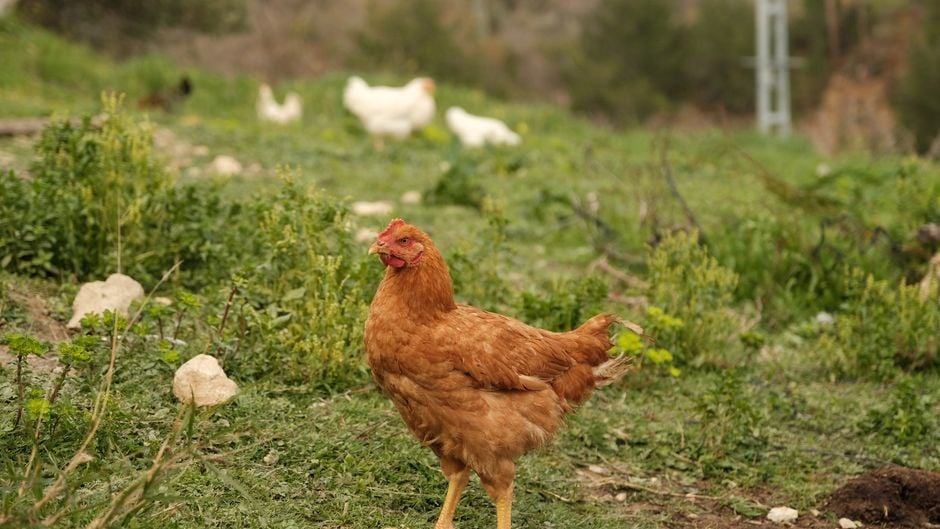
Pasture-raised is the label with real teeth – especially when it carries third-party certification. Certified Humane® standards for pasture-raised poultry require a minimum of 108 square feet of outdoor pasture per bird, with continuous outdoor access during daylight hours. These chickens live largely outdoors, forage naturally on insects, worms, seeds, and grasses, and are regularly moved to fresh pasture. The difference in daily lived experience between a pasture-raised bird and a cage-free bird is stark – one lives in confinement, the other lives an actual outdoor life.
Nutritional Differences That Matter
The farming environment shapes more than animal welfare – it directly affects the nutritional quality of the food on your plate. What a chicken eats and how it lives determines the nutrient density of its meat and eggs.
More Omega-3s, Vitamins D, E, and Beta-Carotene
Research comparing pasture-raised eggs to conventionally raised eggs has found striking differences. Pasture-raised eggs can contain:
- Twice as much omega-3 fat
- Three times more vitamin D
- Four times more vitamin E
- Seven times more beta-carotene
These are meaningful nutritional gaps. Omega-3s support heart and brain health. Vitamin D plays a critical role in immune function and bone strength. Vitamin E is a powerful antioxidant. Beta-carotene – the compound that gives egg yolks their deep orange color – converts to vitamin A in the body and supports vision, skin health, and immunity. Pasture-raised chicken meat similarly reflects higher levels of these beneficial nutrients compared to birds raised indoors on commercial feed.
Why Non-GMO Feed Matters
Outdoor foraging gives pasture-raised birds a nutritional head start, but the supplemental feed they receive matters too. Non-GMO feed – made from corn, soy, wheat, and barley that have not been genetically modified – uses natural, unaltered ingredients. Non-GMO feed production relies on more traditional farming methods, which supports biodiversity, reduces synthetic chemical use, and helps keep those chemicals out of waterways.
As of 2020, an estimated 90-94% of corn and soy grown in the U.S. is genetically modified, and roughly 95% of American livestock are fed those GMO crops. Freedom Valley Farm sources its soy-free, non-GMO feed from a Pennsylvania mill, combining that clean feed base with daily outdoor foraging as the foundation of its production model.
Non-GMO feed works best as part of a broader system that also includes humane housing, outdoor access, and no use of antibiotics, hormones, or growth promotants. When all those elements align, the result is a healthier bird and a higher-quality product.
Rotational Grazing: Better for Birds and Land
One of the defining practices of genuine pasture-raised farming is rotational grazing. Rather than keeping birds in a fixed outdoor area that degrades over time, farms move flocks regularly to fresh pasture – giving previously grazed land time to rest and recover.
Stronger Immunity, Less Need for Antibiotics
Constant access to fresh forage provides birds with a varied, natural diet that supports stronger immune systems. Chickens on fresh pasture consume insects, worms, seeds, and green plants – exactly the kind of diverse nutrition their biology is built for. This natural resilience reduces the need for antibiotics as a management tool. Freedom Valley Farm operates with no antibiotics, added hormones, or vaccines, relying instead on the immune-supporting conditions that daily pasture rotation naturally creates.
Soil Health and Carbon Sequestration
The land benefits too. Rotational grazing distributes chicken manure evenly across the pasture, returning organic matter and nutrients to the soil rather than concentrating waste. Chickens’ natural scratching aerates the ground and supports root growth. These practices align closely with regenerative agriculture – a farming model designed to restore land, increase biodiversity, improve soil structure, and sequester carbon from the atmosphere.
The environmental impact of pasture-raised poultry, when managed through rotational grazing, differs meaningfully from that of confined poultry operations. Soil actively restored by grazing animals absorbs more carbon, retains more water, and produces more nutritious forage over time – creating a self-reinforcing cycle of land health.
So, Is Pasture-Raised Chicken Better?
By every meaningful measure examined here – animal welfare, nutritional density, environmental impact, and farming transparency – pasture-raised chicken holds a clear advantage over cage-free and free-range alternatives. The label requires more space per bird, results in measurably richer nutrition, and when paired with rotational grazing and non-GMO feed, supports both the birds and the land in ways that conventional systems cannot replicate.
That said, not every farm using the “pasture-raised” label operates to the same standard. The most reliable approach is to look for third-party certifications like Certified Humane®, seek out farms that offer genuine transparency about their practices, and – where possible – buy directly from producers who can show you exactly how their animals are raised.
For consumers who want to make that choice without sacrificing convenience, Freedom Valley Farm now ships its pasture-raised, non-GMO, soy-free chicken frozen via UPS to customers across 24 states, with delivery in as little as three days – making farm-direct access more practical than ever.
Freedom Valley Farm
+1 443 752 4338
2523 Bradenbaugh Road
White Hall
Maryland
21161
United States


